
Continuous Monitoring Beyond the ICU
VITALDOCTOR sets a new standard for patient monitoring across hospital environments, particularly during transitions from ICU to general wards. Secure, real-time physiological data flow for every patient, regardless of location.
View Technical Specs
Multi-parameter Tracking
High-fidelity acquisition of multiple vital signs and physiological signals with just one sensor unit and in one unified real-time stream.
Automatic Prioritization
Smart algorithms automatically analyse live data from multiple patients on just one screen to highlight those requiring immediate attention before crises occur.
Automated Alerts
The software detects when alarm thresholds are exceeded or fall below the defined limits. This ensures that the right clinician receives the right alert at the right time.
Cable-free Design
Total patient mobility with medical-grade wireless protocols that eliminate bedside clutter.
HIPAA-Compliant Security
End-to-end encrypted transmission of medical data.
Vital signs are measured. But what happens in between?
Between scheduled observations, changes in a patient's condition may go unnoticed. Explore how continuous monitoring can improve visibility between routine checks.
Challenges of intermittent monitoring
Time-consuming rounds
Manual observations require repeated visits, which can add to the workload of clinical teams.
Delayed recognition
A change in patient condition may remain unobserved until the next scheduled check.
Documentation demands
Clinical teams must record observations while managing competing responsibilities.
Pressure on care capacity
Monitoring demands can affect the use of staff time and clinical resources.
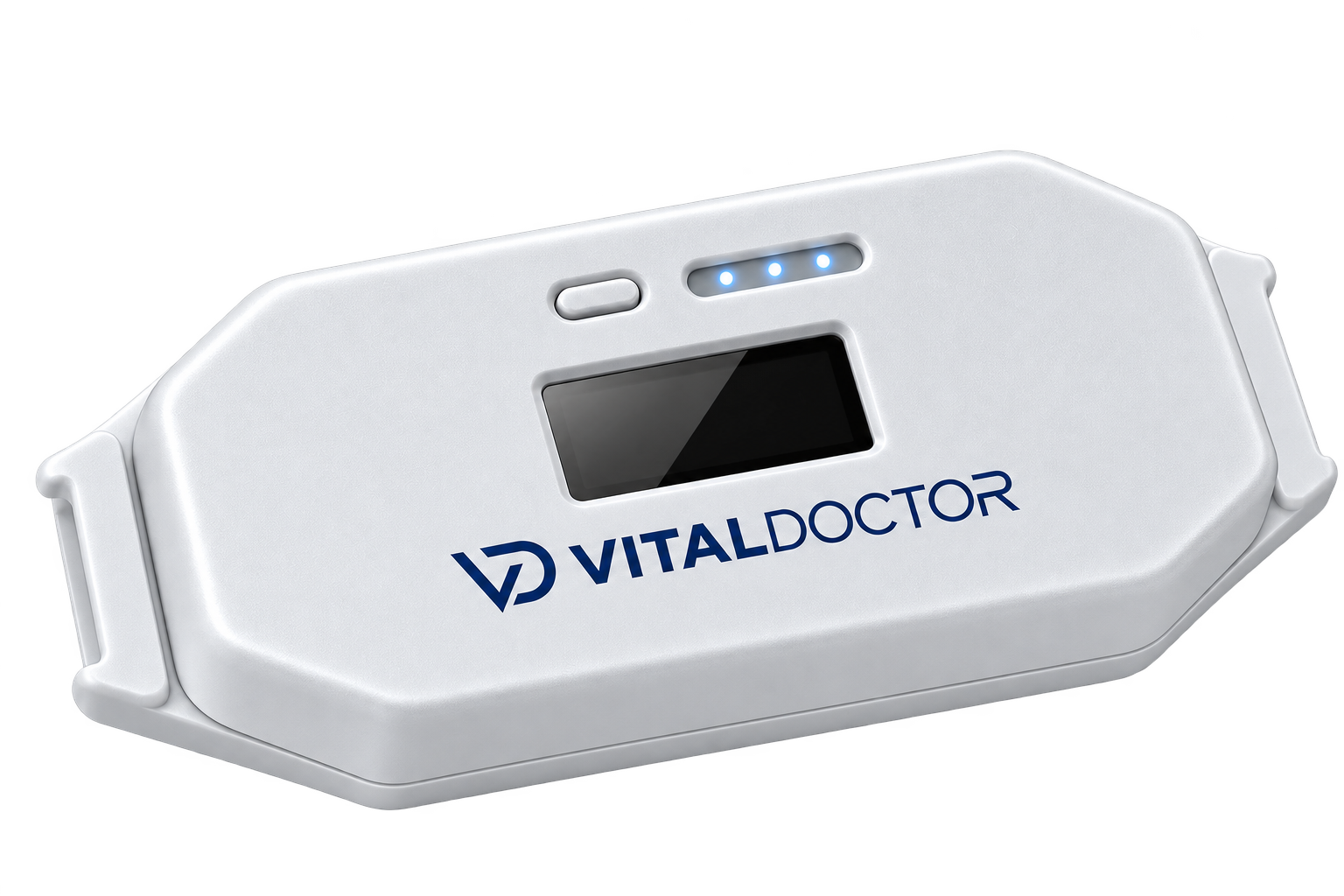
Bridging the Gap in Acuity Transitions
As patients move from the intensive care unit to general wards, monitoring often becomes less consistent.
VITALDOCTOR maintains monitoring of vital signs similar to ICU standards while allowing more freedom on general wards, enabling earlier detection of deterioration and reducing hospital stays.
- Seamless integration with existing EMR/HIS workflows
- Reduced alarm fatigue through intelligent noise filtering
- Centralized dashboard for ward-wide patient oversight.
One dashboard. Your entire ward in view.
A central monitoring dashboard brings patient information, vital-sign trends and alarms together in one place. With regular data updates and clear prioritisation, clinical teams can identify patients requiring attention and access detailed information without switching between disconnected systems.
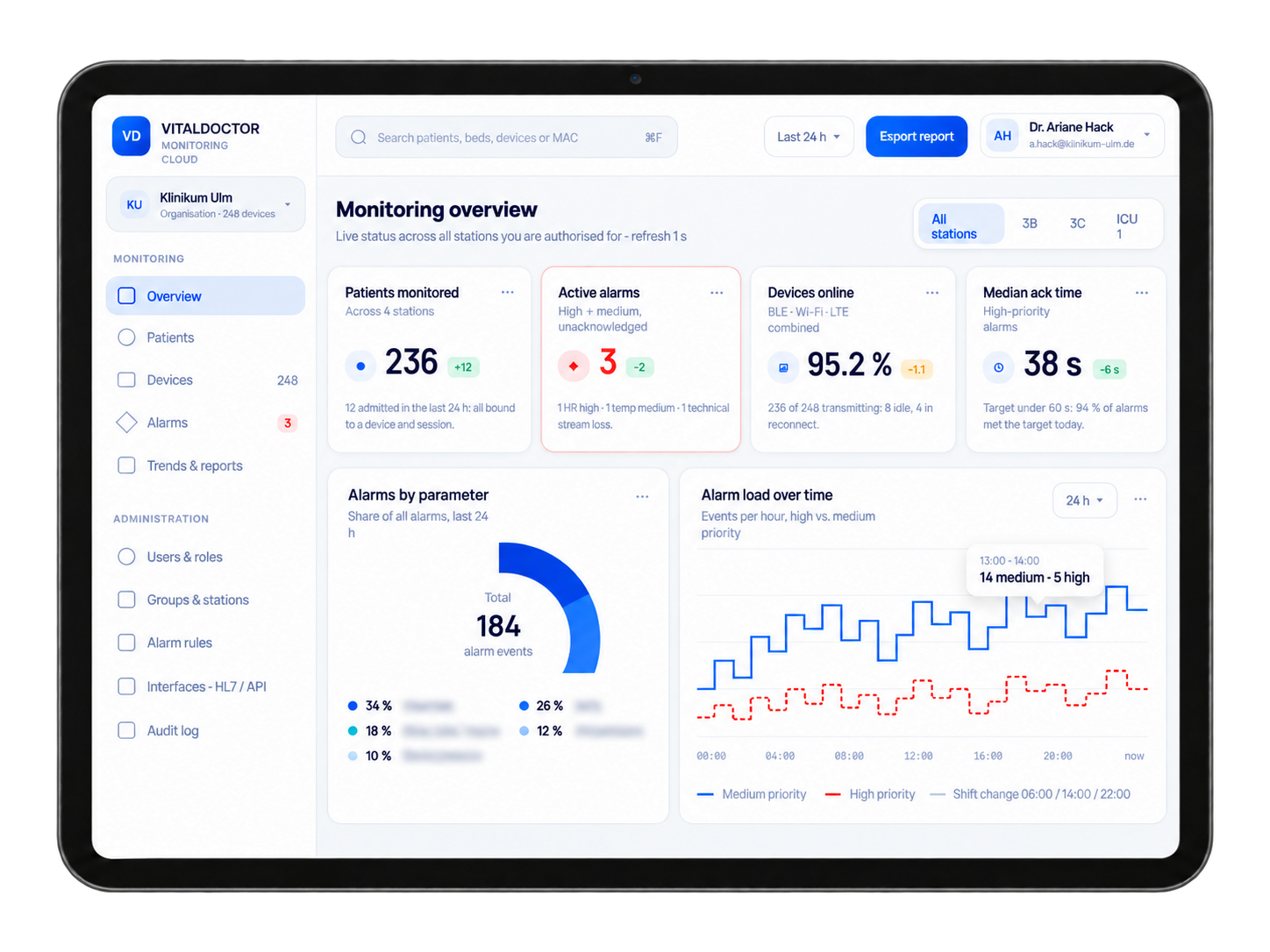
Connected alarm notifications
Alarm information can be integrated into existing clinical notification workflows.
Patients prioritised by urgency
Patients requiring attention can be highlighted and brought to the top of the overview.
Detailed patient monitoring
Open an individual patient to explore current measurements and historical trends.
Centralised documentation
Measurement histories can be archived and made available to hospital information systems through compatible interfaces.